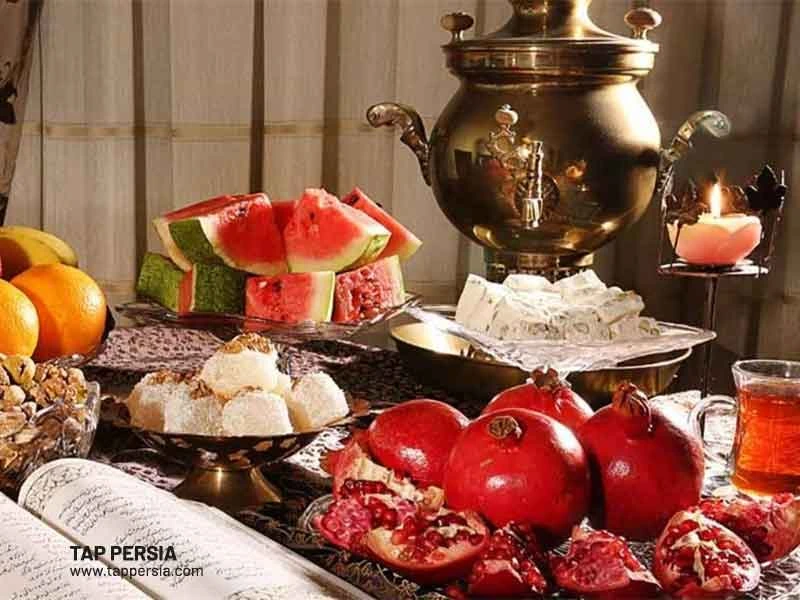

Yalda Night (Shab-e Yalda) is one of the oldest and most beloved Iranian traditions. Every year, Iranians and Persian-speaking communities around the world celebrate this Persian winter solstice festival on the longest night of the year (around December 20–21).
Also known as Shabe Chelleh, Yalda marks the winter solstice in Iran, when darkness reaches its peak and light slowly begins to return. In Persian culture, this night symbolizes the rebirth of the sun, the victory of light over darkness, and a hopeful seasonal renewal.
Families stay awake late into the night, gather around a beautifully decorated Yalda table (Sofreh-e Yalda), share winter fruits, nuts, Persian sweets, read poetry by Hafez, and perform Fal-e Hafez (Hafez divination). Whether in Iran or in the Iranian diaspora abroad, Yalda Night is a living symbol of cultural heritage, warmth, and togetherness.
What Is Yalda Night and Why Is It Celebrated?
What is Yalda Night?
Yalda Night is the Persian winter solstice celebration, observed on the last night of autumn – traditionally the night of December 20 or 21. This is the longest night of the year and the turning point when days slowly start to get longer.
In Persian, “Yalda” means “birth”, referring to the birth of the sun and the arrival of longer, brighter days. In Zoroastrian and ancient Persian symbolism, this is the moment when light defeats darkness, and good triumphs over evil.
Why do Iranians celebrate Yalda Night?
For ancient Persians, the winter solstice was a dangerous time: the longest, darkest night was believed to be when evil forces were at their strongest. People stayed awake together, lit fires and candles, and created a joyful atmosphere to protect themselves from darkness and welcome the light of a new season.
Today, the meaning of Yalda Night in Persian culture is mostly social and emotional:
-
Celebrating family gatherings on Yalda
-
Honoring traditions passed down through generations
-
Marking the seasonal transition and the start of winter
-
Enjoying symbolic Yalda Night foods that represent life, health, and abundance
Yalda Night Foods – Symbolism on the Table
Why Do People Eat Pomegranates and Watermelons on Yalda Night?
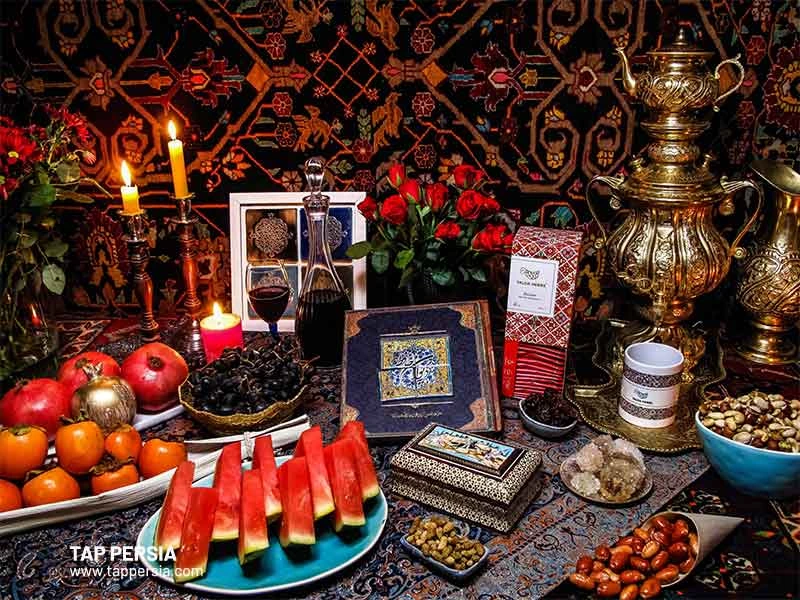
Food is a huge part of Yalda Night, just like Thanksgiving dinner is central to that holiday. For Yalda 2025 and every year, certain Yalda Night foods are almost always present:
Pomegranate – Seeds of Life and Rebirth
-
Pomegranates represent fertility, rebirth, and the cycle of life.
-
Their ruby-red seeds symbolize drops of sunlight, warmth, and blood (life itself).
-
In Yalda pomegranate traditions, the fruits are often served fresh, in salads, or as toppings, sometimes sprinkled with salt and dried mint.
Watermelon – Health and Protection for Winter
-
Traditionally, Iranians believe that eating watermelon on Yalda Night protects you from catching colds in the winter season.
-
The watermelon symbolism is about carrying the freshness and warmth of summer into the coldest period of the year.
Nuts, Dried Fruits, and Sweets
A typical Yalda nuts and sweets platter (Ajil) includes:
-
Almonds, pistachios, walnuts, hazelnuts
-
Dried fruits like raisins, figs, apricots
-
Mixed seeds (sunflower, pumpkin seeds, etc.)
-
Persian winter desserts and sweets
These foods are easy to share and perfect for snacking throughout the night, keeping everyone awake and energized.
Traditional Yalda Dishes Across Iran
While fruits and nuts are universal, main dishes vary by region:
-
Ash-e Anar (Pomegranate Soup) – A hearty soup made with pomegranate juice and herbs.
-
Fesenjoon (Khoresht-e Fesenjan) – Chicken or duck stew with walnuts and pomegranate molasses.
-
Anar Polo – Pomegranate rice often garnished with barberries, nuts, and pomegranate seeds.
-
Nardoon – Regional pomegranate stew (for example, in Qazvin).
Regional favorites also appear on the Yalda table:
-
Gilan (North Iran): Sabzi Polo Mahi (herbed rice with fish).
-
Shiraz: Havij Polo (carrot rice with saffron chicken) and Kalam Polo (cabbage rice).
Together, these dishes form a rich Yalda Night food tradition, combining winter fruits, nuts, and warm stews that highlight the symbolism of abundance and protection.
Yalda History – From Ancient Persia to Today
Some scholars believe that Yalda history goes back over 7,000 years, to ancient Persia and pre-Zoroastrian times.
-
In 502 BC, under Darius I, this sacred winter night was officially included in the Persian calendar.
-
Yalda is closely linked to the worship of Mithra (Mehr), the sun god and symbol of light, justice, and covenants. The night was seen as the birth of Mithra and the beginning of the sun’s victory over darkness.
-
The festival is sometimes connected in spirit to other winter solstice celebrations worldwide, such as certain aspects of Christmas, as both honor themes of birth, light, and renewal.
Over centuries, even with the arrival of Islam and new religious rituals, Yalda Night remained a strong cultural celebration. Today it is cherished as an Iranian cultural festival, focused on heritage, poetry, food, and family, rather than on religious practice.
Shab-e Yalda vs Shab-e Chelleh
You will often see both names: Yalda Night and Shab-e Chelleh. They are related but have slightly different meanings:
-
Shab-e Yalda – Literally “Yalda Night”, emphasizing the birth (Yalda) of the sun and light.
-
Shab-e Chelleh – “The Night of Forty”, referring to the start of the “Big Chelleh”, a forty-day period of deep winter in the Persian calendar.
In traditional Iranian timekeeping:
-
Big Chelleh: From the 1st of Dey (first winter month) for 40 days – the hardest, coldest part of winter.
-
Small Chelleh: A later 20-day/20-night period that completes another symbolic “forty” of winter.
Together, these periods frame the Persian winter solstice and its associated rituals. Today, people generally use Yalda Night and Shab-e Chelleh interchangeably to describe the same celebration of the longest night of the year.
Yalda Night Traditions and Rituals
1. Family Gathering for Yalda
The heart of Shab-e Yalda is the family gathering. Traditionally, people go to the home of the eldest family member – often grandparents – as a sign of respect and affection.
Typical Yalda Night rituals include:
-
Staying awake until after midnight, sometimes until dawn
-
Sharing stories and family memories
-
Storytelling from classical epics like Ferdowsi’s Shahnameh
-
Poetry reading on Yalda, especially from Hafez
-
Jokes, laughter, and music to keep spirits high
This mixture of social gathering, oral literature, and food traditions turns Yalda Night into a warm and memorable cultural reunion.
2. The Yalda Table (Sofreh-e Yalda)
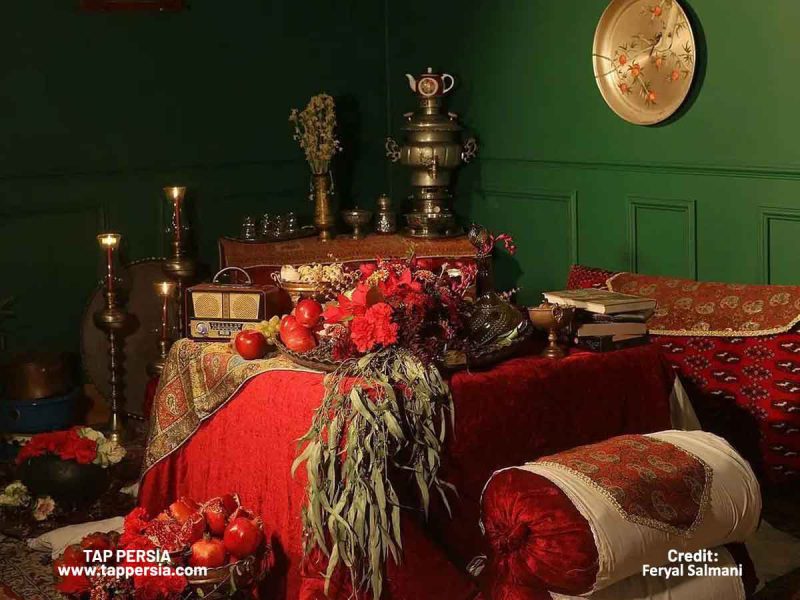
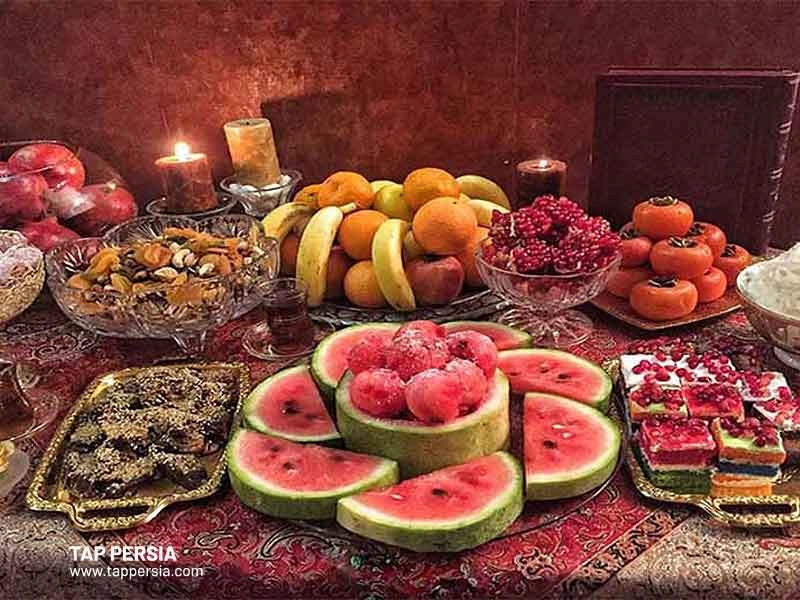
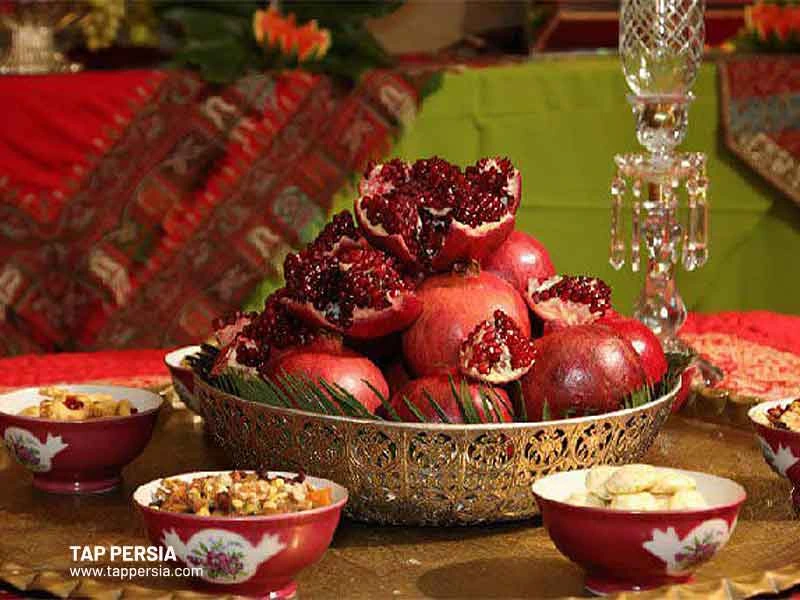
A central element is the Yalda Night table, also known as Sofreh-e Yalda or the Yalda table decor. It is typically covered in red tones, symbolizing dawn, life, and warmth, and filled with:
-
Pomegranates
-
Watermelons
-
Nuts and mixed seeds
-
Dried fruits
-
Persian sweets and winter desserts
-
Candles and decorative lights
The Yalda table is not just about eating – it reflects Yalda symbolism: abundance, protection, continuity of life, and the hope that light will return after the darkest night.
3. Korsi – Warmth at the Center of the Night
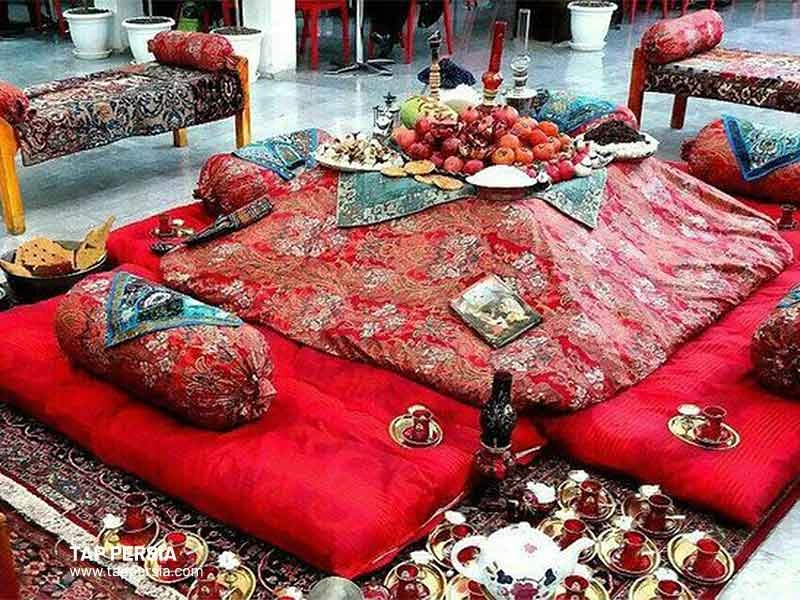
In many traditional Iranian homes, especially in the past, families gathered around a Korsi:
-
A low wooden table with a heater underneath
-
Covered with a large, thick red blanket
-
Family members sit around, legs tucked under the blanket, sharing warmth
Even in modern apartments with central heating, some families still set up a Korsi for Yalda as a nostalgic and symbolic centerpiece for the night.
Why Is Yalda Night Red? – Decorations and Home Décor
Yalda Night decorations often revolve around one main color: red.
Red appears in:
-
Pomegranates and watermelon
-
Tablecloths and Sofreh-e Yalda
-
Clothing – many people wear red on Yalda
-
Candles and lanterns
What does red symbolize on Yalda Night?
-
The crimson of dawn after the longest night
-
The warmth of life and blood
-
The flame of candles and fire, symbols of light and protection
Many families also:
-
Light candles or use string lights around the Yalda table
-
Decorate with winter greenery, traditional patterns, or even fireworks in some communities
All of this creates a cozy and visually striking Yalda home décor, perfect for Yalda social media posts, family photos, and Yalda greeting cards.
Poetry, Hafez, and Fal-e Hafez on Yalda Night
No Yalda celebration feels complete without poetry reading. Literature is at the heart of Persian culture, and Yalda Night is like a living festival of Iranian literature.
Divan-e Hafez – The Soul of Yalda
Almost every Iranian home owns at least one copy of Divan-e Hafez. On Shab-e Yalda, families perform Fal-e Hafez (Hafez divination):
-
Everyone silently makes a wish or asks a question in their heart.
-
The oldest family member (or a respected elder) opens the Divan-e Hafez at random.
-
They read the poem aloud and interpret it as Hafez’s answer or guidance.
This ritual combines:
-
Fortune telling with Hafez
-
Poetry reading on Yalda
-
Shared laughter and reflection when the verses feel “too accurate”
Sometimes families also read from Ferdowsi’s Shahnameh or other classical works, continuing long-standing storytelling traditions.
Yalda Night Around the World – Iranian Diaspora & Global Celebrations
Yalda is not only celebrated in Iran. Variations of Shab-e Yalda / Shab-e Chelleh are observed in:
-
Afghanistan
-
Tajikistan
-
Kurdish regions
-
Some parts of Central Asia
And wherever there is an Iranian diaspora, you’ll likely find Yalda Night events and Persian cultural festivals in:
-
Community centers and cultural institutes
-
Universities and student associations
-
Restaurants and cafes hosting Yalda Night parties
If you search “Yalda festivals near me” in major cities, you may find:
-
Persian cultural events with music and dance
-
Public Yalda Night celebrations with poetry readings
-
Workshops explaining how to celebrate Yalda Night for beginners
These gatherings help preserve Iranian traditions abroad and introduce Yalda Night to people from other cultures.
UNESCO and Yalda Night – Intangible Cultural Heritage
Yalda / Chelleh has been recognized internationally as part of the intangible cultural heritage of humanity. It has been jointly nominated by Iran and Afghanistan, highlighting:
-
Its role as a mirror of cultural identity
-
Emphasis on hospitality, friendship, and peaceful coexistence
-
Its value as a symbol of cultural diversity and preservation
This recognition shows that Yalda Night is not just a national celebration – it is a precious part of the world’s cultural heritage.
Source: https://ich.unesco.org/en/RL/yald-chella-01877
How to Celebrate Yalda Night – Ideas for Modern Gatherings
Whether you’re in Iran or celebrating Yalda Night abroad, here are simple Yalda celebration ideas and tips for Yalda Night for beginners:
-
Set Up a Yalda Table (Sofreh-e Yalda)
-
Use a red tablecloth
-
Add pomegranates, watermelon, nuts, dried fruits, and sweets
-
Place candles and maybe a Hafez book in the center
-
-
Plan a Family Reading Session
-
Read poems from Hafez or other Persian poets
-
Try Fal-e Hafez with your guests
-
Share stories from your family’s past
-
-
Prepare Yalda Night Foods
-
Serve pomegranate and watermelon (even in small symbolic amounts)
-
Offer a nuts platter and winter fruits
-
Cook a traditional Yalda dish like Fesenjoon, Ash-e Anar, or Anar Polo
-
-
Yalda Decoration Ideas
-
Red cushions, blankets, or table runners
-
Candle clusters or fairy lights
-
Pomegranate-themed decorations or printed motifs
-
-
Yalda Gifts and Greeting Cards
-
Small Persian holiday gifts like sweets, nuts, or books of poetry
-
Yalda greeting cards with wishes for light, health, and happiness
-
Yalda gifts for children: storybooks, fruit baskets, or simple toys
-
-
Share the Moment Online
-
Post your Yalda Night photos and stories on social media
-
Share quotes from Hafez or Persian poetry
-
Join online Yalda Night events or live poetry sessions
-
Yalda Night FAQ
When is Yalda Night celebrated each year?
Yalda Night is celebrated on the last night of autumn, usually December 20 or 21, marking the winter solstice and the longest night of the year.
How long does Yalda Night last?
It lasts one night, but families often stay awake until very late, sometimes until dawn, to welcome the first light after the darkest night.
What does Yalda Night symbolize in Persian culture?
Yalda symbolizes the victory of light over darkness, good over evil, hope over fear, and the rebirth of the sun. It is also a time for family unity, storytelling, and cultural preservation.
What foods are eaten on Yalda Night?
Common Yalda Night foods include:
-
Pomegranates and watermelons (core symbols)
-
Nuts & dried fruits (Ajil)
-
Persian sweets and winter fruits
-
Warm dishes like Fesenjoon, Ash-e Anar, Anar Polo, and other regional specialties
What does the Yalda Night table include?
The Yalda table decor usually includes:
-
A red cloth
-
Pomegranate, watermelon, nuts, dried fruits, sweets
-
Candles, sometimes flowers, and often Divan-e Hafez
What is Fal-e Hafez and why is it done on Yalda Night?
Fal-e Hafez is a form of Hafez divination. People open the Divan of Hafez at random and interpret the poem they see as spiritual guidance or an answer to a question. It’s done on Yalda because the night is seen as mystical and meaningful, perfect for reflection and seeking insight.
How is Yalda Night celebrated around the world?
In Iran, Afghanistan, Tajikistan, and Persian-speaking communities, Yalda is a major winter celebration. In Western countries, Yalda Night celebrations are held by the Iranian diaspora in homes, cultural centers, universities, and event spaces, often open to non-Iranians interested in Persian culture.